Household waste permits Hammersmith and Fulham Council guide
Posted on 26/06/2026
If you live in Hammersmith and Fulham and you have more waste than your usual bin day can handle, the rules can feel a bit murky at first. One minute you're trying to clear a flat, a garden corner, or a stack of boxes after a move; the next you're wondering whether you need a permit, whether a council service applies, or whether you're accidentally stepping into a fly-tipping problem. This Household waste permits Hammersmith and Fulham Council guide breaks it down in plain English so you can deal with household rubbish safely, legally, and without needless stress.
We'll cover how household waste permissions work in practice, who may need them, the common traps people fall into, and what to do if you're arranging a clearance for a home, flat, or small domestic project. If you also want broader context on local disposal rules, it can help to read the related council rubbish rules guide for West Kensington as well.
Why Household waste permits Hammersmith and Fulham Council guide Matters
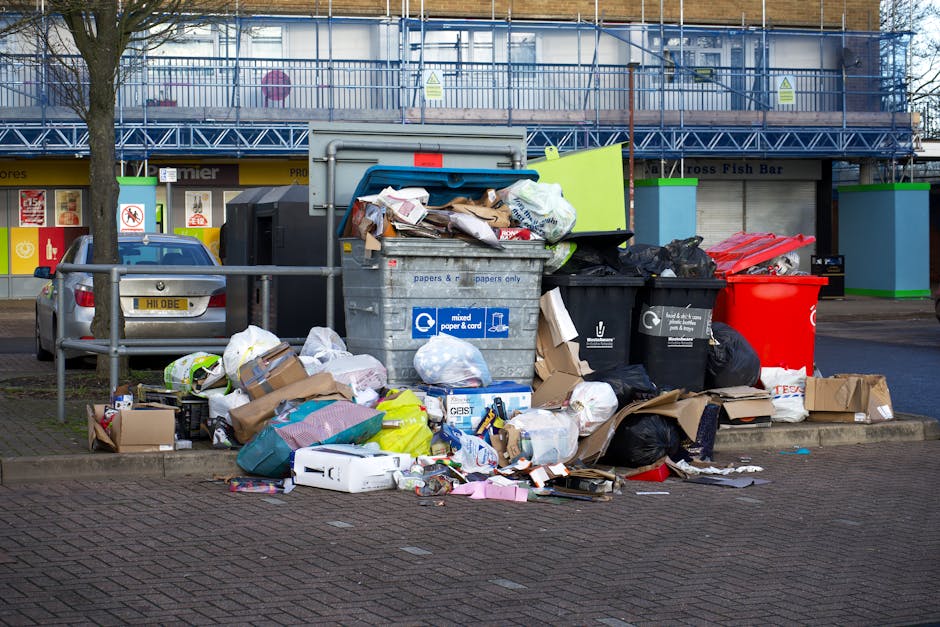
Household waste sounds simple until you have more of it than a standard bin collection can reasonably handle. Then the practical questions start. Can you leave it on the pavement? Do you need a permit for a van? Is that extra sofa considered bulky waste? Do you need council approval for using a skip or a larger vehicle? Those are the kinds of questions that catch people out.
This matters because domestic waste in London is tightly managed. Councils want streets kept clear, public land used properly, and waste moved by the right person at the right time. That is fair enough. Nobody wants a row of mattresses, plasterboard, and broken cabinets sitting outside a terrace on a wet Thursday afternoon. Still, for residents, the challenge is usually less about intention and more about knowing the correct route.
In Hammersmith and Fulham, the most common frustration is mixing up a household clearance with a general rubbish job. A few bags from a clear-out may be fine with a regular collection approach, but once you start dealing with heavier loads, multiple items, or vehicle access, the rules can change quickly. That is where a permit guide saves time, avoids fines, and stops a small domestic job from turning into a messy one.
It also helps when you are planning around everyday London life. Parking is tight. Roads are busy. Flat access can be awkward. By the time you are carrying a wardrobe down a narrow staircase, the last thing you want is a permit issue slowing things down. Truth be told, the admin is often the least glamorous part of a clearance, but it is the part that keeps the whole thing lawful.
How Household waste permits Hammersmith and Fulham Council guide Works
The core idea is straightforward: if you are disposing of household waste in a way that affects public space, vehicle access, or collection logistics, you may need permission or need to use a council-approved route. That might mean a permit for placing something on public land, arranging the right type of collection, or making sure a contractor is operating correctly.
Household waste permits are not always one single document with one simple rule. Depending on the situation, you may be dealing with:
- a household bulky waste collection arranged through the council
- a permit related to a skip or a container on the road
- a vehicle access or parking permit issue for a clearance team
- rules about leaving waste out for collection
- guidance on what can and cannot be taken through domestic disposal routes
If that sounds slightly broad, it is because domestic waste management is broader than many people expect. A bin bag in a hallway, a broken bed base on a landing, and a pile of renovation offcuts are all "waste," but they are not necessarily handled the same way. The practical difference is usually about size, location, and who is taking responsibility for moving it.
For example, if you are clearing a rented flat near a station and need a same-day collection, you may be better off looking at a local service such as same-day rubbish collection in West Kensington rather than improvising with a van and a hope. The permit question only becomes more important when you are using public space, shared access, or restricted parking bays.
One useful way to think about it: permits are about control. They help ensure the waste is moved legally, the road stays safe, and the responsibility is clear. If you skip that part, the risks usually show up later, and they are rarely polite about it.
Key Benefits and Practical Advantages
Getting household waste permissions right has a few clear benefits, and they are not just bureaucratic niceties.
- Less risk of fines or enforcement action because your disposal route is more likely to be compliant.
- Cleaner, safer streets with no waste left where it should not be.
- Better planning for access, timing, and loading.
- Fewer delays if you are working around parking, flats, or narrow access.
- Clearer responsibility if you are using a contractor or arranging the work on behalf of a landlord, tenant, or family member.
There is also a quieter benefit: peace of mind. You know that feeling when a job is half-finished and a pile of old furniture is still in the hallway? That's the sort of thing that nags at you every time you walk past. Once the permit or permission side is sorted, the whole process tends to feel much less chaotic.
For households managing larger clear-outs, the council route is not always the quickest, but it can be the right fit when the amount of waste is manageable and the timing works. For larger or more awkward jobs, especially where a vehicle and lifting are involved, a professional clearance route may be more practical. You can compare that kind of approach with the broader options explained in the services overview and decide what fits your situation best.
Who This Is For and When It Makes Sense
This guide is especially relevant if you are one of the following:
- a homeowner clearing out lofts, garages, sheds, or spare rooms
- a tenant moving out of a flat with bulky items to dispose of
- a landlord dealing with domestic clearance after a tenancy ends
- a family member managing a house clearance on someone else's behalf
- a resident with items too large for normal bin services
- someone doing a small DIY project at home and left with awkward waste
It also makes sense if you are in a property with limited access. A top-floor flat with no lift, a narrow mews road, or a bay that is already heavily used can turn a simple rubbish job into a small logistical puzzle. Sometimes the permit issue is not about the waste itself. It is about the vehicle needed to remove it, or where that vehicle can stop.
If you are clearing a home near a busy road or station, access planning can matter as much as the disposal method. A lot of local residents find that a practical, scheduled collection works better than trying to improvise on the day. If that sounds familiar, rubbish removal near West Kensington Station is a helpful related read.
Not every household will need a formal permit every time they throw something away. That would be overkill, and nobody needs that. But if your waste is going beyond normal kerbside collection, it is worth checking the rules before you shift a single chair. A few minutes upfront can save a lot of back-and-forth later.
Step-by-Step Guidance
Here is a practical way to work through the process without getting tangled in the details.
1. Identify what kind of waste you have
Start by separating ordinary household rubbish from bulky items, electricals, garden waste, and any DIY or construction leftovers. This matters because each category may follow a different route. A bin bag is one thing; a dismantled wardrobe is another.
2. Decide where the waste will be placed or collected
Ask yourself whether the items will stay fully on private property, be carried to the kerb, or need to be loaded from public space. If a van, skip, or container needs to sit on the street, that is often where permission comes into play.
3. Check whether the council route is enough
For smaller domestic loads, a council household waste or bulky item service may be the simplest route. For larger or more urgent clearances, a private collection may be more practical. The key is to choose the route that fits the amount and type of waste, not just the cheapest-sounding one.
4. Look at access, parking, and timing
These are the bits people underestimate. Is there enough space for a vehicle? Will the collection clash with resident parking? Is the road restricted at certain times? Even a perfect disposal plan can stumble if the access plan is weak.
5. Confirm who is responsible
If a landlord, tenant, letting agent, or family member is involved, make sure someone is clearly responsible for arranging and paying for the collection. Confusion over responsibility causes delays more often than people think.
6. Keep a record
Hang on to confirmations, receipts, or any reference numbers you are given. This is not just about being tidy. It can help if you later need to show that the waste was handled properly.
A small real-world moment: we often see people leave the permit or collection admin until the items are already in the hallway. That is usually when stress arrives, usually right when you're trying to get the kettle on. Better to sort the paperwork first, honestly.
Expert Tips for Better Results
A few habits make a big difference when dealing with household waste in a borough like Hammersmith and Fulham.
- Measure before you move. Take a quick look at bulky items and door widths. It sounds obvious, but the number of "will this fit through the stairs?" moments is surprising.
- Group similar items together. It helps you decide whether something can go through a domestic route, a clearance service, or a special arrangement.
- Avoid mixing waste types. A pile that includes furniture, electricals, and rubble can become harder to handle and potentially more expensive.
- Book with enough lead time when possible. If you are not in a rush, that gives you more choice and less friction.
- Ask how the waste will be processed. Recycling and reuse matter, especially when you have items still in decent condition.
If you are dealing with a full property clear-out, it is worth thinking in zones: bedroom, kitchen, loft, storage, then larger items. It sounds a bit methodical, but methodical is good. Chaotic clear-outs are how people end up paying twice.
For anyone trying to avoid hidden surprises, this is also the stage where it helps to read about hidden rubbish clearance charges in West Kensington. Costs and permissions are often tied together more than people expect.

Common Mistakes to Avoid
Most problems happen because the job was treated like a simple lift-and-dump exercise. In practice, domestic waste disposal has a few easy-to-miss traps.
- Assuming all household waste is handled the same way. It isn't.
- Leaving items on the street without permission. That can lead to enforcement issues, and nobody wants that conversation.
- Forgetting parking or loading restrictions. A perfectly legal collection can still go wrong if the vehicle has nowhere to stop.
- Underestimating the weight or volume. A few "small" items suddenly become a lot once they are all together.
- Mixing domestic waste with trade or renovation debris. Different waste streams can require different handling.
- Leaving it too late. Last-minute arrangements tend to cost more, and they are more stressful.
Another common one: people assume the cheapest option is automatically the best. Sometimes it is. Often it isn't. If a collection looks suspiciously cheap, check what is actually included. A vague price with extra charges hidden in the fine print is not a bargain. It's a headache wearing a discount sticker.
Tools, Resources and Recommendations
You do not need a toolbox full of specialist gear to handle household waste properly, but a few basic tools and resources make life much easier.
- Measuring tape for bulky items and access points
- Notebook or phone notes to track what needs removing
- Labels or marker pens for sorting keep, donate, recycle, and remove
- Camera or phone photos to document loads before collection
- Checklists for moving day, decluttering, or flat clearance
If you want a more organised approach to domestic clear-outs, the broader recycling and sustainability information is useful reading because it helps you think about reuse and responsible disposal rather than just "getting rid of stuff." That mindset usually leads to better outcomes.
For larger clearances, the most useful recommendation is simple: compare the route, not just the price. Is the job suited to council collection, a private waste removal team, or a full house clearance service? If you are unsure, look at the scope of the task first, then decide. That keeps the decision grounded in reality rather than guesswork.
Law, Compliance, Standards, or Best Practice
Domestic waste disposal in England is governed by general legal duties around waste handling, fly-tipping, and the proper transfer of waste. You do not need to become a lawyer to deal with a household clear-out, but you do need to stay on the right side of the rules.
The safest practical approach is:
- use a lawful collection route
- make sure waste is not left in a public place without permission
- keep evidence of legitimate disposal where appropriate
- check that anyone removing waste is responsible and transparent
Best practice also includes not assuming a contractor "must be fine" just because they turned up in a van. Ask basic questions. Where will the waste go? Is anything recyclable? What happens to electrical items? If a team cannot answer those questions clearly, that is usually a red flag. Not always, but usually enough to slow you down and think again.
Where a permit is needed, the timing matters. A permit or approval that is valid on Monday may not cover a collection you pushed to Friday. Small admin details, big consequences. That is the unpleasant little truth of it.
Options, Methods, or Comparison Table
Here is a simple comparison of common household waste disposal options in Hammersmith and Fulham-type situations.
| Option | Best for | Advantages | Things to watch |
|---|---|---|---|
| Council household or bulky waste route | Smaller domestic clear-outs and items suited to local collection rules | Usually straightforward and familiar | May have limits on item type, timing, or volume |
| Private rubbish collection | Faster clearances and mixed household loads | Flexible timing, useful for awkward jobs | Check exactly what is included and whether permits or access issues apply |
| Skip or container on the road | Larger domestic projects or clearances with substantial waste | Useful for ongoing jobs | May involve road or placement permissions and careful site planning |
| Full house clearance service | Whole-property clear-outs, probate-style jobs, or heavily cluttered spaces | Reduces stress and handles lifting, sorting, and removal | Make sure the quote explains access, disposal type, and any extras |
If your waste is mostly domestic but the property access is awkward, a full clearance service can be more practical than trying to stitch together several smaller solutions. That is especially true in flats, period conversions, and homes with narrow staircases. London loves a tight hallway, doesn't it?
Case Study or Real-World Example
Imagine a couple in a first-floor flat in West Kensington. They are moving out after several years, and the flat has the usual mix of life: a wardrobe that will not go through the door in one piece, a broken desk, some boxes from the loft, old cookware, and a tired mattress that has been annoying them for months. The street outside is busy, parking is tight, and the lift is, generously speaking, unreliable.
They first assume they can leave items out the night before and "sort it in the morning." Then they realise that public space, access, and collection timing all matter. Instead of risking confusion, they check what needs removing, separate what can be reused or recycled, and arrange a lawful collection route. The result is boring in the best possible way: no surprise delays, no awkward items sitting in the way, and no panic when the moving van arrives.
That sort of scenario is common. The exact items change, but the pattern does not. People often delay the admin because the physical task feels more immediate. Fair enough. But in practice, the paperwork and timing are what make the job feel smooth.
For more context on domestic clearances in the area, you may also find this West Kensington flat rubbish clearance case study helpful.
Practical Checklist
Use this quick checklist before you move household waste out of a property.
- Identify all waste types: general rubbish, bulky items, electricals, garden waste, DIY leftovers
- Check whether anything can be reused, donated, or recycled
- Confirm whether waste will stay on private land or touch public space
- Review whether a permit, skip arrangement, or vehicle access permission may be needed
- Measure large items and access points
- Make sure parking or loading space is realistic
- Book the collection or disposal route in advance where possible
- Keep written confirmation or reference details
- Separate anything sensitive or personal before the clearance
- Recheck timing on the day so items are not left out too early
If you can tick those off, you are already ahead of most people. Really, you are.
Conclusion
Household waste permits and related disposal permissions can seem a little tedious at first, but they exist for a reason: they keep domestic waste handling safe, lawful, and more organised for everyone. Once you understand the basic decision points - what kind of waste you have, where it will go, who is responsible, and whether public space is involved - the process becomes much more manageable.
The main thing is not to rush. Small clear-outs are one thing. Larger household jobs, flat moves, and awkward bulky items deserve a proper plan. If you take a few minutes to check the route before you start hauling things downstairs, you will usually save yourself time, money, and a fair bit of frustration.
And if you are weighing up whether to handle it yourself or bring in help, that is sensible too. The right choice is the one that fits your property, your timetable, and your peace of mind. Sometimes the boring, careful option is the best one. It usually is.
Get a free quote today and see how much you can save.


Copyright © . House Clearance West Kensington. All Rights Reserved.